

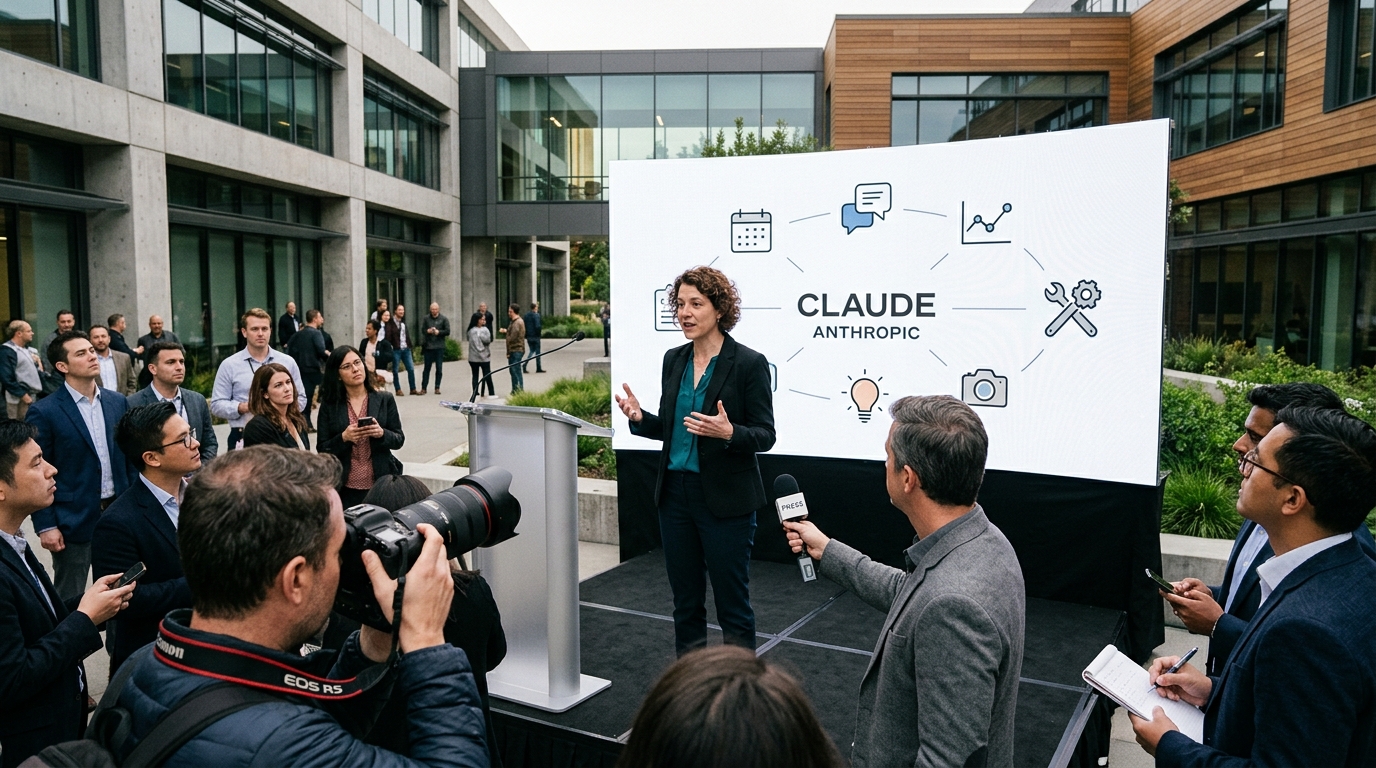
In a strategic move poised to redefine the entrepreneurial landscape for Small and Medium Enterprises (SMEs), Anthropic has announced the integration of its Claude AI across seven pivotal applications that form the backbone of daily operations for thousands of businesses. This development marks a transition from the era of "experimental chatbots" to "functional artificial intelligence," where Large Language Models (LLMs) are no longer mere Q&A tools but active partners in workflow orchestration.
The Strategy of "Embedded Intelligence"
For years, small businesses watched AI advancements from the sidelines, perceiving these solutions as reserved for tech giants with massive budgets. Anthropic, with this initiative, aims to dismantle this myth. Instead of asking entrepreneurs to change their habits and migrate to a new platform, it brings Claude’s power to where they already work.
The seven selected applications cover a broad spectrum of needs: from Customer Relationship Management (CRM) and Enterprise Resource Planning (ERP) to content creation and customer support. This integration allows Claude to access the specific context of each business, offering personalized solutions that previously required specialized staff.
Security and Ethics: The Competitive Edge
One of the primary hurdles in AI adoption by SMEs has been the fear regarding data security and the reliability of outputs. Anthropic has invested heavily in "Constitutional AI," an approach that ensures the model operates within specific ethical and operational boundaries. For a small business owner, this translates to fewer model "hallucinations" and greater confidence in handling sensitive customer data.
- Automated correspondence with a personalized touch.
- Real-time financial data analysis and reporting.
- Creation of marketing strategies based on localized data.
- Supply chain optimization through predictive analytics.
Economic Implications and the Future of Work
Scaling Claude into small business apps is not just a technological upgrade; it is an economic necessity. In an environment of rising inflation and skilled labor shortages, AI offers a pathway to increase productivity without a proportional increase in costs. However, this raises questions about the future of low-skill jobs that traditionally served as entry points for young people into the labor market.
Anthropic seems to acknowledge this risk, positioning Claude as an "assistant" rather than a replacement. The model's ability to take over repetitive and time-consuming tasks allows the entrepreneur and their staff to focus on strategic growth and human connection—elements that remain irreplaceable in the local market.
Conclusion
Anthropic’s move to expand across seven small business applications is a milestone for 2026. It demonstrates that the battle for AI supremacy will not only be fought in Silicon Valley laboratories but also within the digital tools used by the baker, the accountant, and the e-shop owner. The democratization of access to high-level intelligence is now a reality, and businesses that embrace it first will hold the advantage in the new digital economy.





