

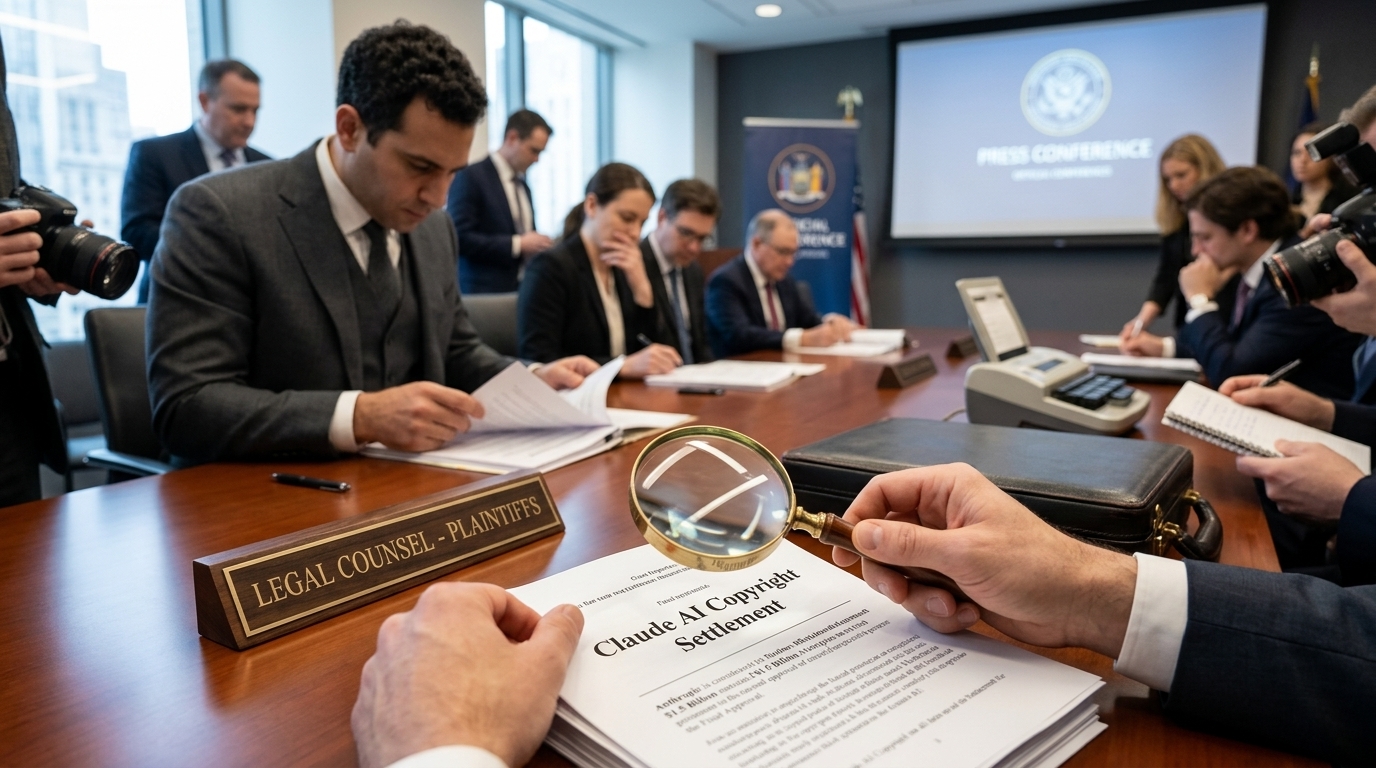
A U.S. federal court has granted final approval to a landmark $1.5 billion settlement between AI startup Anthropic and a group of authors and publishers. The ruling, issued by Judge Araceli Martinez-Olguin, concludes a high-profile class-action lawsuit regarding the use of copyrighted material in training artificial intelligence models.
Compensation of $3,000 Per Work
Under the settlement terms, authors and publishers holding the rights to the works involved are expected to receive approximately $3,000 for each book. With an estimated 500,000 works covered by the agreement, this represents one of the largest settlements in the history of U.S. intellectual property law. However, the financial resolution does not necessarily signal a total victory for creators.
Fair Use vs. Illegal Acquisition
The case hinged on a critical legal distinction made by the court. Retired Judge William Alsup had previously ruled that the act of training an AI model on copyrighted texts could be considered "fair use" under American law. This was a significant win for the AI industry's broader arguments.
The legal liability for Anthropic arose not from the training itself, but from the source of the data. While books purchased and digitized by the company were deemed legally obtained, the court found that acquiring material from pirated repositories like Library Genesis and Pirate Library Mirror was illegal. Anthropic opted to settle to avoid the uncertainty of a jury trial and the risk of even more substantial damages.
No Binding Precedent
Crucially, this settlement does not resolve the legal debate for the entire AI sector. Because the decision comes from a federal district court and resulted in a compromise rather than an appellate ruling, it does not set a binding precedent for other courts. Similar legal battles continue against industry giants including Google, Meta, and OpenAI, as creators fight for compensation and recognition in the age of generative AI.





