

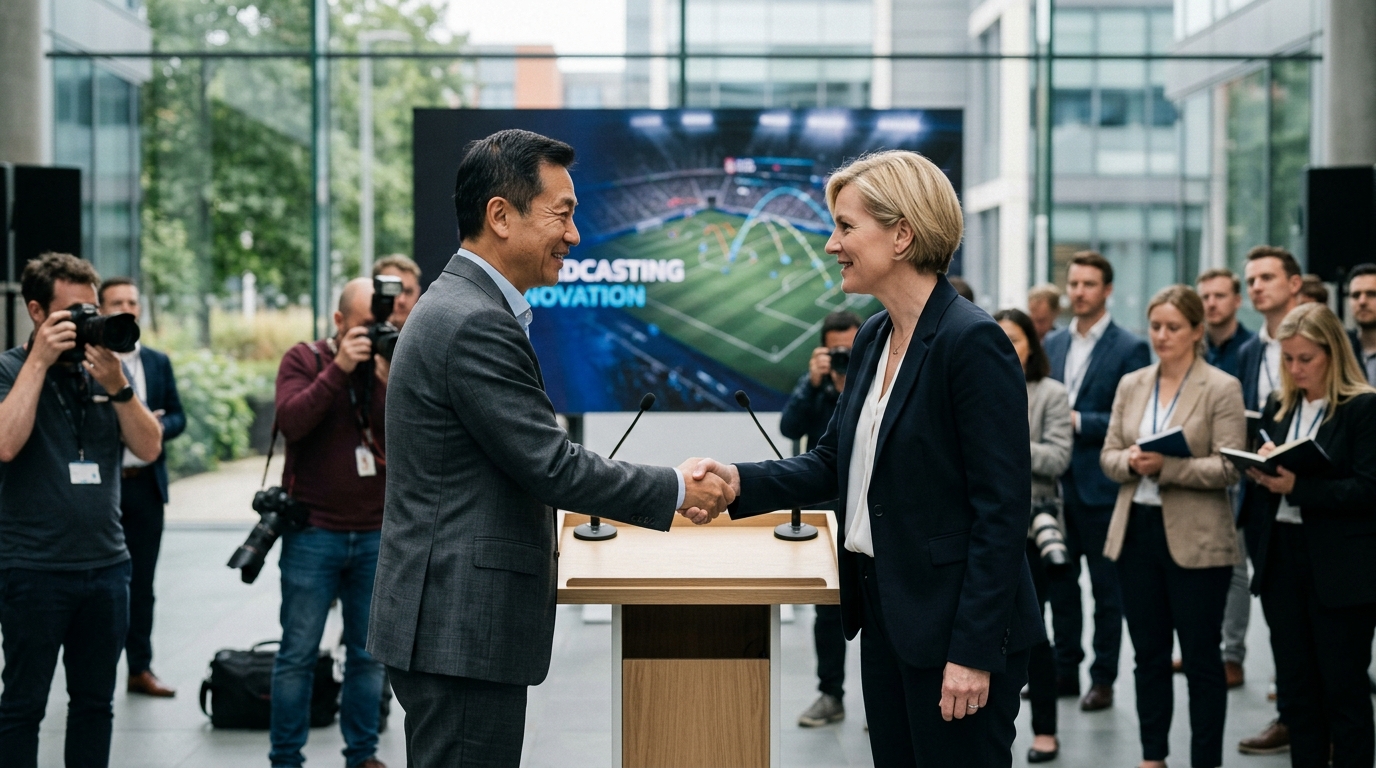
In an era where football is no longer confined to the four lines of the pitch, UEFA and the Chinese giant Alibaba Cloud have announced a multi-year partnership that promises to transform the viewing experience for millions of fans worldwide. This agreement is not merely a sponsorship deal; it is a deep technological integration that brings Artificial Intelligence (AI) to the forefront of sports production and content distribution.
The Technological Backbone of a New Era
The collaboration focuses on leveraging Alibaba's cloud infrastructure to manage the massive volumes of data generated during major UEFA competitions, such as the Champions League and the Euro. Through the use of advanced machine learning algorithms, Alibaba Cloud will enable broadcasters to automatically generate real-time highlights tailored to each viewer's preferences.
Imagine a fan interested only in goalkeeper saves or the tactical movements of a specific midfielder. Alibaba's AI will be able to isolate these moments from multiple camera angles and serve them to the user almost instantaneously. This dramatically reduces production time, which traditionally required dozens of technicians and hours of editing in Outside Broadcast (OB) vans.
From the Pitch to the Cloud: A Strategic Shift
UEFA has been seeking for years to reduce its operational costs and environmental footprint. Traditional broadcasting requires transporting tons of equipment to every stadium. By shifting to a 'cloud-first' approach, much of the signal processing is moved to remote servers. This not only reduces carbon emissions from travel but also allows for more flexible signal distribution on a global scale.
For Alibaba, this deal serves as the ultimate 'certificate of quality' for the European market. At a time when Chinese tech companies face rigorous scrutiny from Western regulators, partnering with Europe's premier sports organization demonstrates that technological excellence can transcend geopolitical hurdles. Alibaba Cloud is not just providing storage; it is providing the intelligence that will make football more interactive.
Personalization and the 'Attention Economy'
The major challenge for UEFA is attracting younger generations (Gen Z and Gen Alpha), who are accustomed to short, fast, and personalized content like that found on TikTok. A static 90-minute broadcast is no longer enough. Through AI, Alibaba will help develop second-screen applications where viewers can see augmented reality (AR) statistics overlaid on their live stream.
- Automated commentary translation into dozens of languages via AI.
- Real-time tactical analysis with graphics explaining player movements.
- E-commerce integration, allowing fans to purchase merchandise directly through the viewing platform, leveraging Alibaba's retail expertise.
However, this digitalization brings with it questions regarding data protection. UEFA assures that the partnership fully complies with GDPR regulations, but the concentration of so much information about fan habits in the hands of a tech giant remains a sensitive issue.
Conclusion: Football as a Digital Product
The Alibaba-UEFA deal marks the end of the era of passive viewership. Football is being transformed into a dynamic, digital product that adapts to the user. As 5G technology expands and AI becomes more sophisticated, the distance between the stadium stands and the living room sofa will continue to shrink, with Alibaba holding the reins of this transition.





