

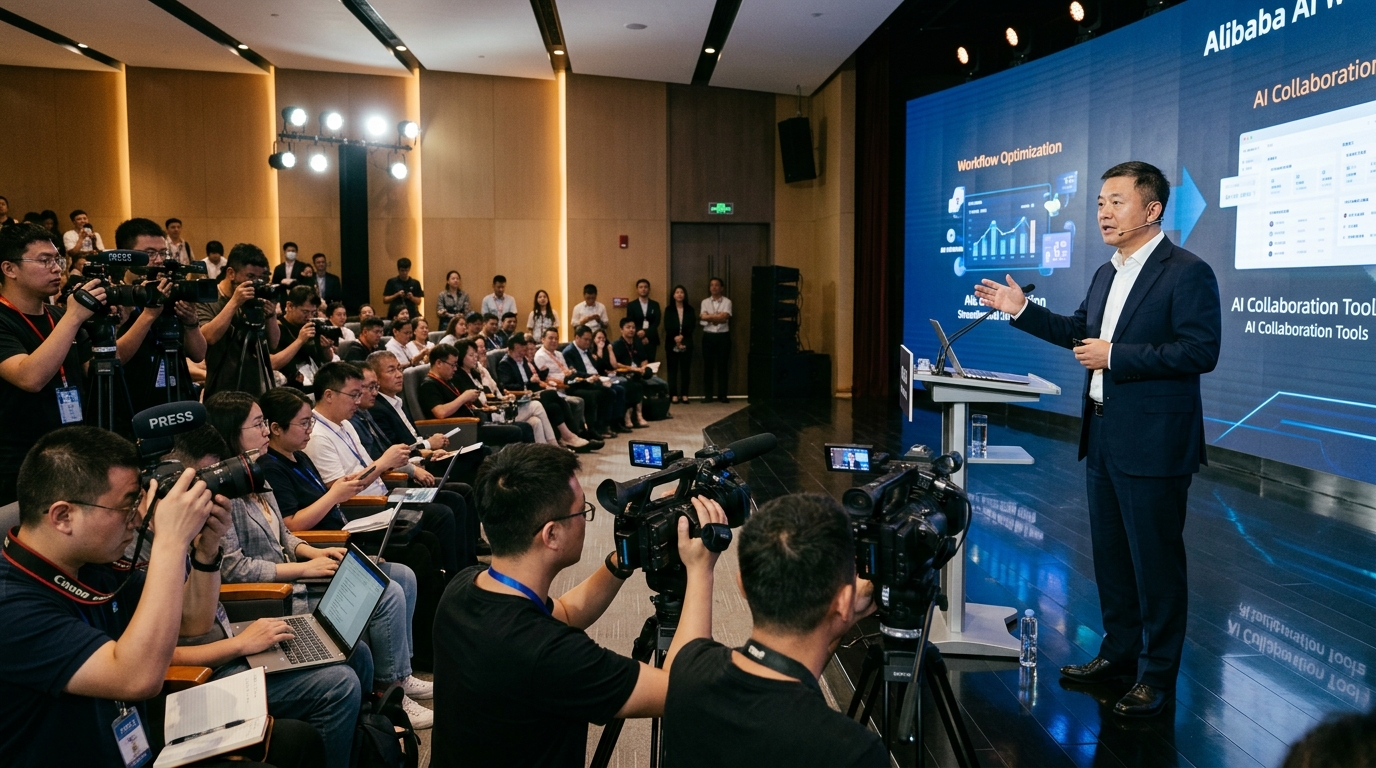
In the rapidly evolving landscape of Chinese technology, Alibaba Group Holding Ltd. is undergoing a radical restructuring of its workplace-oriented artificial intelligence (AI) tools. This move is not merely a technical upgrade but a strategic response to mounting competition from domestic giants such as Tencent, Baidu, and the surging ByteDance. As the Large Language Model (LLM) market quickly saturates, Alibaba is shifting its focus from the quantity of models to the quality and usability of applications.
The Transition from Models to Applications
For a long time, the Chinese tech sector was embroiled in a "War of a Hundred Models," with every company striving to showcase its own LLM. However, July 2026 finds the market in a maturation phase. Alibaba, through its Cloud division and the DingTalk platform, has recognized that enterprises are no longer looking for just a clever algorithm, but for integrated solutions that fit directly into their daily workflows. The consolidation of tools under the umbrella of the Tongyi Qianwen model aims to reduce the fragmentation that characterized the company's previous efforts.
DingTalk, Alibaba's leading communication and collaboration platform for businesses, is at the heart of this strategy. By integrating advanced AI Agents, the platform is transforming from a simple messaging tool into an AI operating system. These agents can automate complex tasks, from resource scheduling to real-time sales data analysis, offering businesses a level of productivity that previously required armies of analysts.
The Price War and the Efficiency Strategy
One of the primary factors driving Alibaba toward this reorganization is the relentless price war in AI tokens. ByteDance, with its Doubao model, sent shockwaves through the market by offering extremely low prices, forcing Alibaba and Baidu to follow suit. In an environment where profit margins from simply providing API access are shrinking, value is shifting to the ecosystem of tools.
"AI is no longer a luxury advantage, but a basic infrastructure. Our success will be judged by how seamlessly we can integrate it into our customers' daily lives," sources within Alibaba Cloud indicate.
Alibaba's strategy is now focused on offering "AI-as-a-Service." Instead of competing solely on price per token, it offers a comprehensive development environment (low-code/no-code) where companies can create their own specialized AI assistants without needing deep programming knowledge. This creates a "lock-in" effect, as businesses that base their operations on Alibaba's tools are less likely to migrate to competitors just for a slightly lower price point.
Challenges and the Geopolitical Context
Despite the internal reorganization, Alibaba faces significant external challenges. U.S. export restrictions on advanced semiconductors continue to impact the ability of Chinese companies to train their models on the latest GPU architectures. This makes software efficiency even more critical. Alibaba is investing in optimization techniques that allow its models to run effectively on less powerful hardware, ensuring service continuity.
Furthermore, regulatory pressure from Beijing remains a volatile factor. The Chinese government desires AI primacy but simultaneously maintains strict control over the content and influence of tech giants. Alibaba must balance innovation with compliance, a process that requires constant adjustments to its tools.
Conclusion: The New Era of Corporate AI
Alibaba's move to simplify and unify its AI tools signals the end of the period of experimentation and the beginning of the period of implementation. In the race for dominance in China's digital economy, victory will not necessarily go to the one with the largest model, but to the one who manages to make artificial intelligence invisible and indispensable in the workplace. For Alibaba, the stakes are high: to remain the backbone of Chinese business at the dawn of the age of intelligence.





