

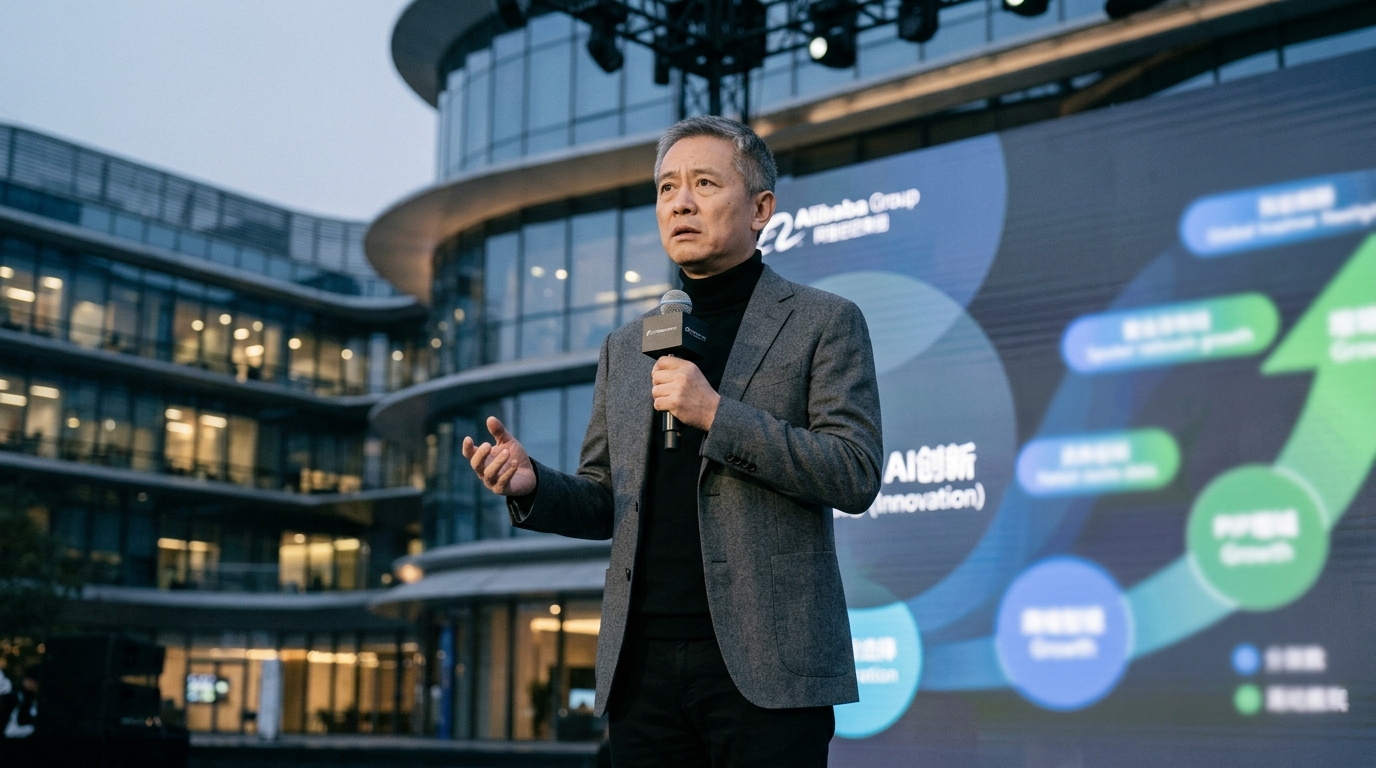
The recent 5.3% drop in Alibaba Group Holding Ltd’s shares is more than just a market fluctuation; it is a reflection of the deep existential transition the Chinese giant is undergoing. As the group released its financial results, it became clear that management has chosen a path of "aggressive growth," sacrificing short-term profitability for a seat at the head of the global Artificial Intelligence (AI) race. Investors, however, reacted with skepticism, focusing on the margin contraction caused by massive capital expenditures (CapEx).
The Strategy of Sacrifice for Cloud and AI
Alibaba stands at a critical crossroads. The Cloud Intelligence Group, once considered the "crown jewel" destined for an independent IPO, remains the central pillar of its strategy. With the rise of Generative AI, the demand for computing power has skyrocketed. Alibaba is responding by building new data centers and purchasing specialized hardware, despite US chip export restrictions.
This investment surge has a direct impact on financial metrics. While cloud revenue shows double-digit growth, operating costs are rising faster. Alibaba’s leadership, led by Eddie Wu and Joe Tsai, argues that providing AI infrastructure (Model-as-a-Service) is essential for retaining the future customer base. Without these investments, the company risks falling behind domestic competitors like Tencent and Baidu, as well as ByteDance, which is aggressively entering the enterprise services sector.
Competition and the Geopolitical Minefield
The landscape in China is particularly complex. On one hand, the domestic market faces challenges due to weak consumer confidence, affecting Alibaba's core e-commerce business (Taobao and Tmall). On the other hand, the US-China tech standoff complicates access to top-tier semiconductors, such as those from Nvidia. This forces Alibaba to invest billions in developing its own solutions or adapting less powerful domestic chips—a costly and time-consuming process.
- Record-level R&D spending increases.
- Pressure from price cuts in cloud services to attract startups.
- Uncertainty regarding the final ROI of AI applications.
Despite the pressures, Alibaba maintains a massive "war chest" of cash. Its decision to continue share buybacks and dividend distributions is an attempt to appease shareholders, but the market seems to be asking for more: clear evidence that AI can translate into net profit rather than just increased turnover.
The Future: A Long-Term Wait
Analysis of the results shows that Alibaba is transforming from a retail company into a technology infrastructure company. This transition is painful. Tech history has shown that those who dominate infrastructure (like Amazon with AWS) enjoy long-term profitability, but the period of building that infrastructure is characterized by volatility. For Alibaba, the bet is whether it can balance internal reorganization with external market and regulatory pressures.
"Artificial Intelligence is not just a new product for us; it is the driving force that will redefine every aspect of our business," a company executive recently stated, highlighting the commitment to the new vision.
In conclusion, the 5.3% drop is a reminder that the road to technological supremacy is paved with financial challenges. Alibaba must prove that burning cash today will lead to dominance tomorrow, in a world changing faster than ever.





