

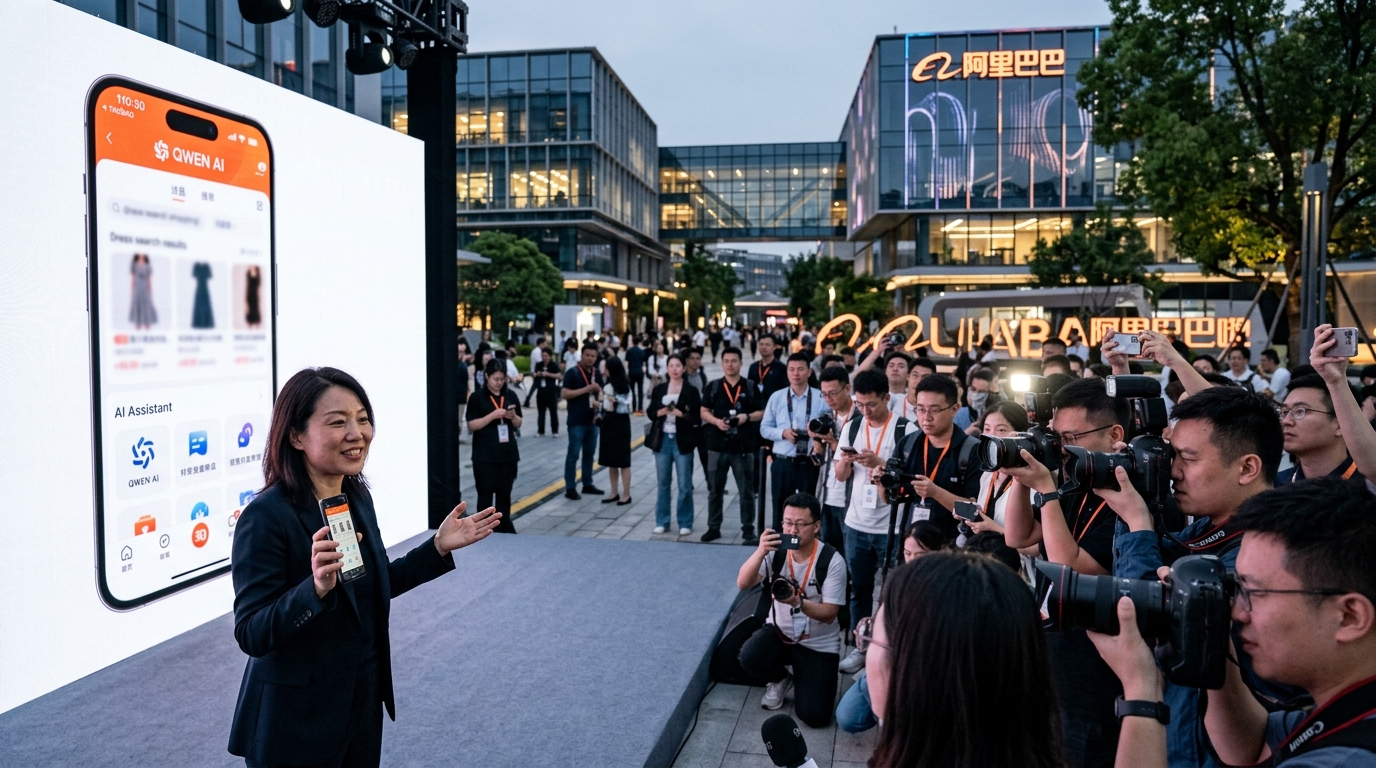
In a move that signals the dawn of a new era for global e-commerce, Chinese giant Alibaba has announced the full integration of its advanced artificial intelligence model, Qwen (Tongyi Qianwen), into the Taobao platform. This development is not merely an upgrade to the existing search engine but the introduction of 'agentic shopping'—a model where AI no longer functions as a simple assistant but as an autonomous agent capable of negotiating, comparing, and scheduling purchases with minimal human intervention.
From Search to Autonomy: The Shopping Agent
For decades, e-commerce has relied on the 'search and click' logic. Users typed what they wanted, filtered results, and made a selection. Alibaba's new strategy with Qwen dismantles this linear model. The new 'agents' integrated into Taobao have the capacity to understand complex natural language requests, such as: 'Organize a dinner for six with an Italian theme, including ingredients and equipment, with a budget of $150 and delivery by Saturday.'
The system will not just return a list of products. It will analyze reviews, compare prices across different merchants within Alibaba's ecosystem, check logistics availability via Cainiao, and propose a comprehensive 'solution basket.' The difference lies in the model's ability to make decisions based on context and user preferences, transforming the shopping experience from a tedious decision-making process into a curated service.
A Strategic Response to Competition
Alibaba's move does not occur in a vacuum. The Chinese AI market is perhaps the most competitive in the world right now. With ByteDance (TikTok) expanding its e-commerce reach and PDD Holdings (Pinduoduo/Temu) exerting pricing pressure, Alibaba needed to redefine its value proposition. Utilizing Qwen, considered one of the world's most powerful LLMs, gives Taobao a technological edge that is difficult to replicate immediately.
Furthermore, this integration aims to increase user 'stickiness.' When an AI agent knows your dietary habits, clothing size, and home decor style, switching to another platform becomes costly in terms of time and effort. Alibaba is building a digital ecosystem where AI serves as the connective tissue between its services, from cloud computing to retail.
Challenges and Ethical Dilemmas
Despite the impressive promises, the transition to agentic shopping raises serious questions. The first concerns privacy. For an agent to function effectively, it requires access to vast amounts of personal data. How will Alibaba ensure that this data is not used to manipulate consumer habits or that sensitive information is not leaked?
The second issue is algorithmic transparency. If an AI agent chooses one product over another, by what criteria does it do so? There is a risk that the AI might promote products with higher profit margins for Alibaba or those from merchants who pay more for advertising, undermining the objectivity of the 'help' offered to the consumer. Regulating these AI 'black boxes' will be the next major battle for regulators, both in China and internationally.
The Future of Commerce is 'Invisible'
Ultimately, Alibaba's goal is to make commerce 'invisible.' Qwen technology allows for an interface that feels more like a conversation with a trusted friend than browsing a website. If the Taobao experiment succeeds, we will see a radical shift in how supply chains operate. Demand will be predicted with startling accuracy, product returns will decrease due to better need-matching, and the concept of the 'shopping cart' may soon be considered anachronistic.
Alibaba is no longer just selling products; it is selling time and intelligence. In a world drowning in choices, the winner will be the one who can make the right decisions on behalf of the customer, earning the most precious currency of the digital age: trust.





