

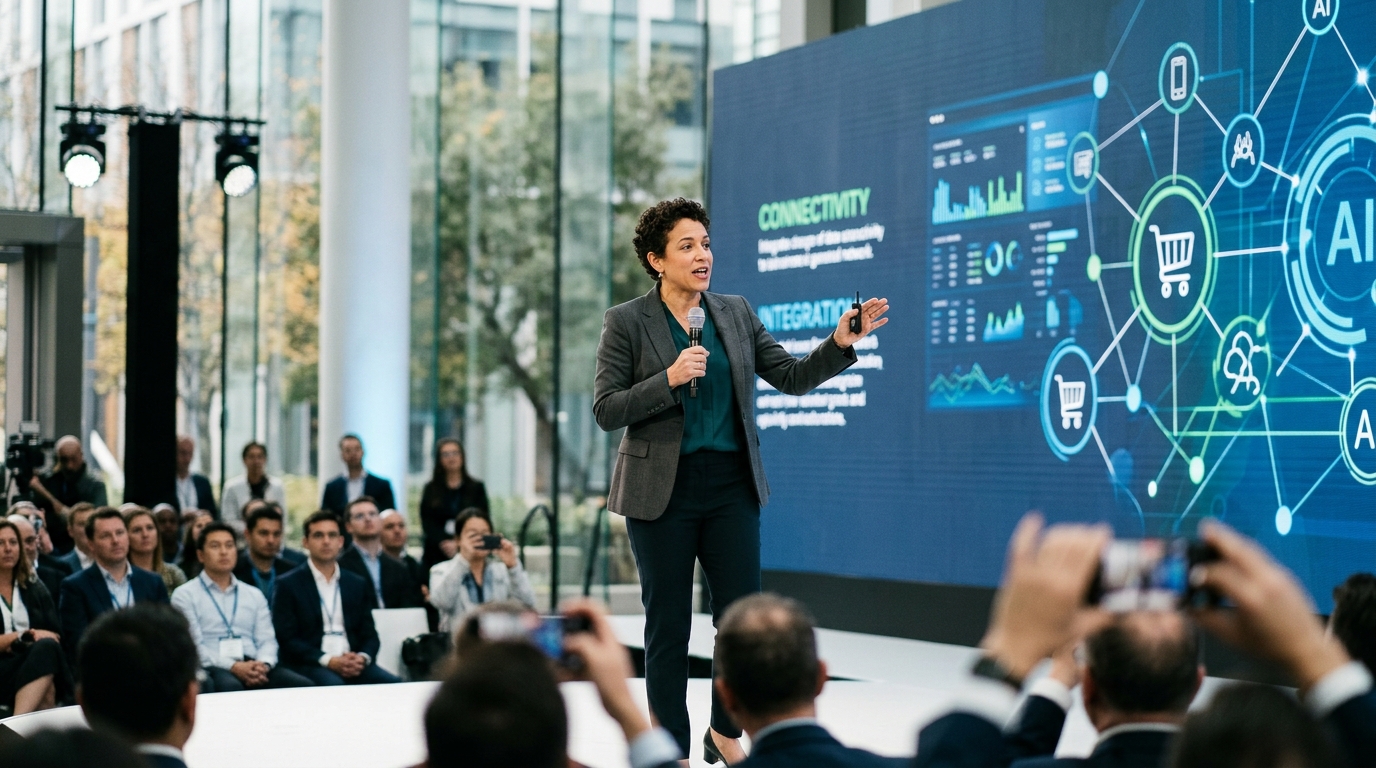
In a move that signals the dawn of a new era for global digital commerce, Chinese giant Alibaba has announced the full integration of its advanced Artificial Intelligence (AI) platforms into its core e-commerce marketplaces. This strategic shift is not merely a technological upgrade but a radical reboot of the company’s business model as it seeks to regain lost ground against aggressive competitors like PDD Holdings (Pinduoduo) and ByteDance.
The Transition to AI-Native Commerce
For Alibaba, integrating the Tongyi Qianwen model—the company’s answer to ChatGPT—into the Taobao and Tmall ecosystems represents the culmination of a long period of internal reorganization. According to company executives, the goal is to create an "AI-native" experience where technology does not act as a bolt-on feature but as the driving force behind every interaction.
The changes begin on the merchant side. Alibaba introduced a suite of tools that allow small and medium-sized enterprises (SMEs) to create high-quality content in seconds. From automatically generating product descriptions and creating photorealistic images without the need for expensive photoshoots, to real-time data analysis for predicting market trends, AI promises to democratize access to tools previously available only to large multinationals.
Redefining the Consumer Experience
From the consumer's perspective, the shopping experience is being transformed from a passive search into an active dialogue. Alibaba's new generation of digital assistants is not limited to finding products based on keywords. Instead, it can understand complex requests, such as "I need camping gear for a mountain trip in rainy weather for a family of four," suggesting personalized solutions that combine reviews, prices, and availability.
"Artificial intelligence is no longer a supporting technology; it is the new operating system of e-commerce," recently stated Eddie Wu, CEO of Alibaba Group.
Furthermore, AI integration extends to the supply chain. Cainiao, Alibaba's logistics arm, now uses deep learning algorithms to optimize delivery routes and manage inventory on a global scale. This drastically reduces delivery times, which is crucial for the success of the AliExpress platform in international markets, where competition with Temu and Shein is relentless.
Challenges and Geopolitical Context
Despite its technological prowess, Alibaba faces significant hurdles. Strict Chinese government regulations on data management and the ethical use of AI pose constraints on the speed of development. Simultaneously, the ongoing tech war between the US and China affects access to critical semiconductors (GPUs) necessary for training large language models.
Internationally, Alibaba must convince Western consumers and regulators of the security of their data. AI integration requires vast amounts of user data to function effectively, causing skepticism in the European Union and the United States. However, the company seems determined to invest billions of dollars in cloud and AI infrastructure, betting that ease of use and low prices will eventually overcome reservations.
The Future: A Frictionless World
Alibaba's move may be the prelude to what follows globally. If the AI integration experiment succeeds, we will see a marketplace where "friction"—the delay between the desire for and the acquisition of a product—will tend toward zero. Platforms will know what we want before we even think of it, and the production process will automatically adapt to the needs of each individual buyer. In this new landscape, Alibaba does not just seek to be a middleman but the intelligent fabric connecting global production with consumption.





