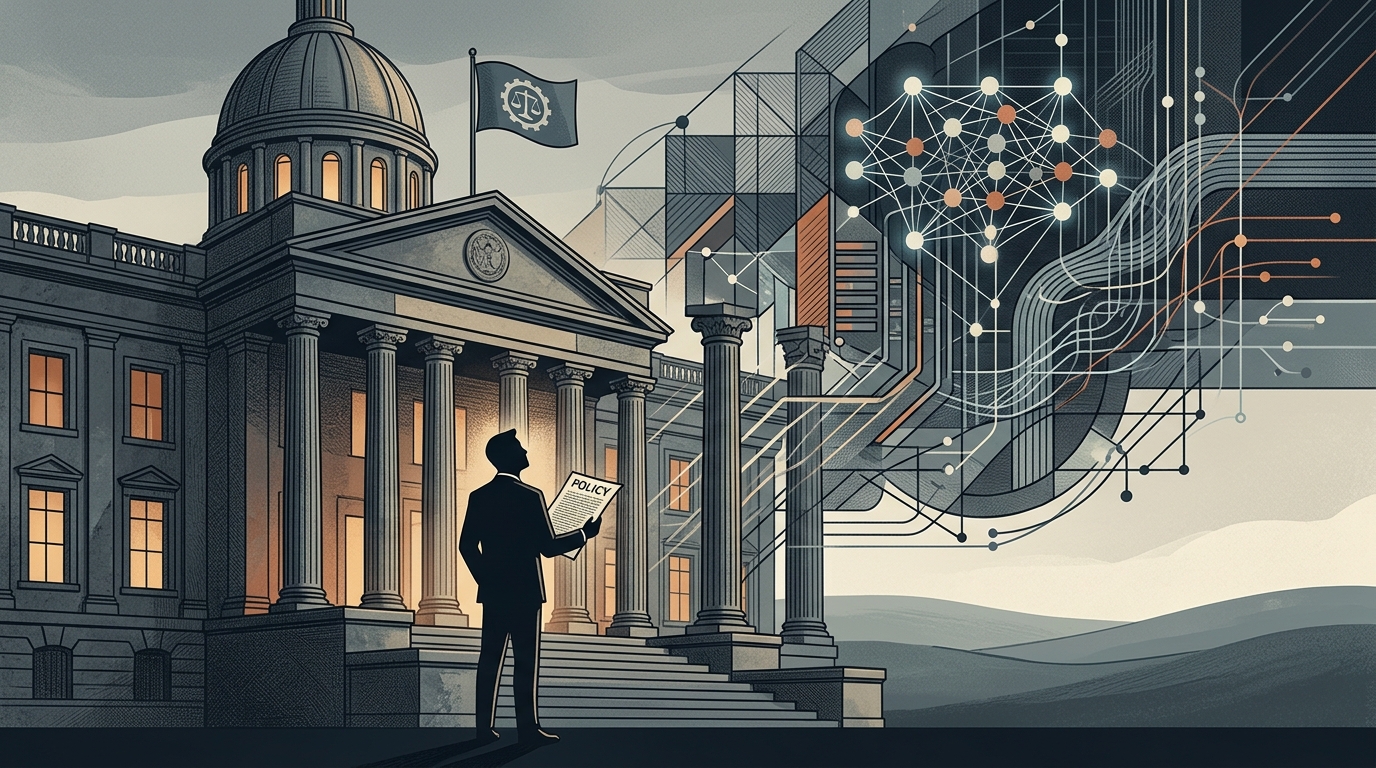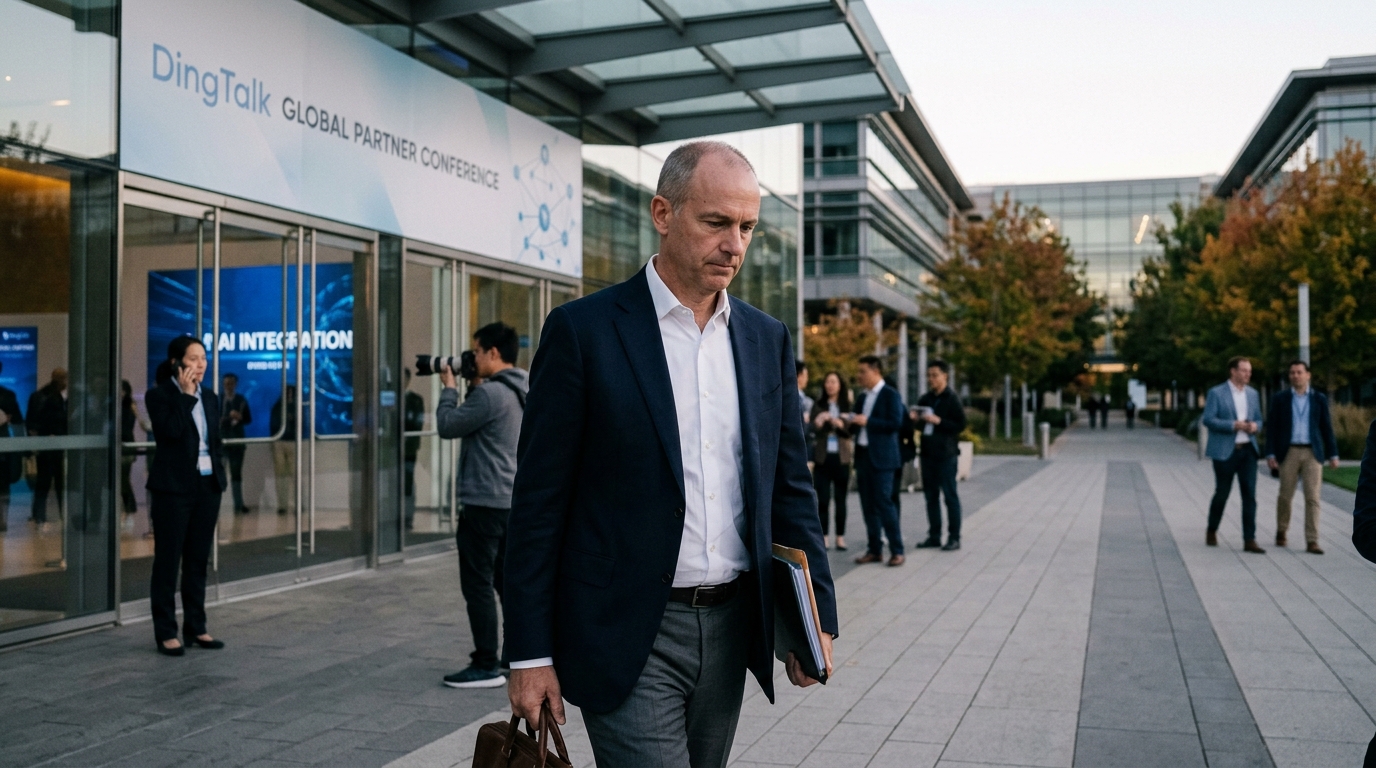
The internal turbulence at Chinese tech giant Alibaba has taken a dramatic new turn with news of the ousting of the founder and CEO of DingTalk, China's leading enterprise communication platform. This move is not merely a change of guard but the culmination of an intense internal struggle over the company's direction in the era of generative artificial intelligence (AI). As Alibaba fights to regain lost ground against rivals like ByteDance and Tencent, the group's leadership under Eddie Wu appears to be enforcing a ruthless 'AI-first' strategy that leaves no room for dissenting views.
A Clash of Visions: Communication vs. Automation
DingTalk began as a messaging app for businesses—a Chinese answer to Slack—but under its founder's guidance, it evolved into a comprehensive productivity ecosystem. However, the recent radical overhaul of the platform, integrating Alibaba's large language models (LLMs) like Tongyi Qianwen, exposed deep rifts in the management pyramid. Alibaba's central leadership pushed for a faster and more aggressive AI integration, transforming DingTalk from a collaboration tool into a 'digital employee' capable of fully automating business processes.
According to sources close to the company, the founder CEO reportedly expressed reservations about the speed of this transition, citing concerns over user experience and the reliability of AI tools in critical business environments. This disagreement was not just technical but philosophical: it concerned whether AI should assist humans or largely replace them within the platform. His removal marks a victory for the 'AI hawks' within Alibaba, who believe the group's survival depends on absolute dominance in the intelligence sector.
Eddie Wu's Strategy and the '1+6+N' Restructuring
The ousting of DingTalk's CEO fits into the broader context of Alibaba's historic restructuring. Eddie Wu, who took the helm of the group to make it more agile and tech-focused, has made it clear that every subsidiary must align perfectly with the priorities of the Cloud Intelligence Group. DingTalk, though operating as a standalone entity, serves as the primary channel through which Alibaba's AI services reach businesses.
- The urgent need for monetization of AI tools.
- The consolidation of user data to train more specialized models.
- Strict cost control during a period of economic uncertainty in China.
These priorities clashed with the growth model DingTalk had followed in recent years, which emphasized expanding the user base and innovating through experimentation. The new leadership demands results now, and the founder's removal is a message to all group executives: loyalty to the new AI dogma is non-negotiable.
Market Competition and Pressure
The timing of this crisis is no accident. ByteDance's Feishu (known internationally as Lark) has gained significant ground among China's younger, tech-savvy companies, offering a sleeker and more integrated user experience. At the same time, Tencent's WeChat Work remains the undisputed leader due to its connection with the broader WeChat ecosystem. Alibaba feels the breath of its competitors and believes the only way out is a 'flight forward' through AI.
"In the China of AI, there is no room for hesitation. You either become the platform that defines the future of work, or you become a footnote in internet history," says a Beijing-based market analyst.
The CEO's removal may solve the problem of internal dissent, but it raises new questions about employee morale and the company's ability to maintain its creative spirit. Founders often represent the 'soul' of Chinese startups, even when owned by giants, and their forced departure can lead to a brain drain toward competitors.
The Future: A DingTalk Without Its Founder
The coming days for DingTalk will be a test of whether AI can truly replace human vision in managing a platform. Alibaba is expected to appoint an executive directly from the Cloud division, ensuring that DingTalk now functions as the 'storefront' for the company's AI capabilities. For the platform's millions of users, this means more automation and more data analysis, but perhaps a less human-centric approach to their daily work. The battle for dominance in the Chinese software market has just entered its most brutal phase.