

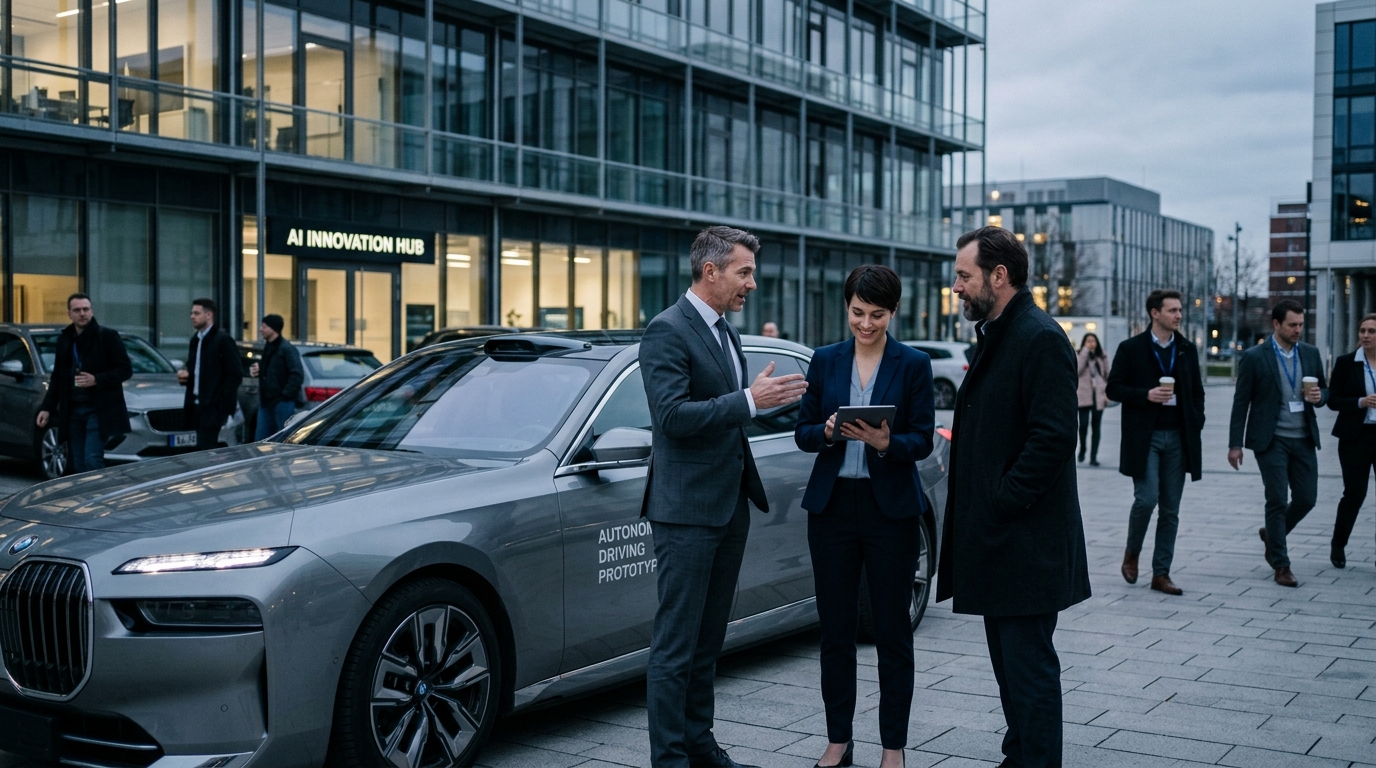
The European automotive industry, the historic pillar of the continent's industrial might, stands at a critical crossroads. After a century of dominance in internal combustion engines, giants like Volkswagen, BMW, and Mercedes-Benz are coming to terms with a new reality: their future depends not on cylinders and pistons, but on algorithms and data. The shift toward the "Software-Defined Vehicle" (SDV) is no longer an optional luxury—it is a survival imperative in the face of aggressive competition from Tesla and Chinese powerhouses like BYD and Xiaomi.
The Cockpit Revolution: From GPS to Generative AI
The most visible transformation for the consumer is taking place inside the cabin. European carmakers are now integrating Large Language Models (LLMs), such as ChatGPT, into their infotainment systems. Volkswagen was among the first to announce the full integration of Generative AI (GenAI) into its voice assistant, allowing drivers to interact with their vehicles using natural language. This is more than just changing a radio station; AI can now answer complex queries, suggest routes based on personal preferences, and even manage a user’s smart home devices while they are on the road.
However, privacy remains a central concern. As cars evolve into "smartphones on wheels," the volume of data collected is unprecedented. European manufacturers are attempting to strike a delicate balance: providing cutting-edge AI services while adhering to the strict requirements of the EU AI Act. By creating a uniquely "European ecosystem" that prioritizes data sovereignty and security, they hope to establish a competitive advantage over American and Chinese rivals who face different regulatory landscapes.
Industrial AI: Redefining Manufacturing Efficiency
Beyond the driver experience, AI is fundamentally reshaping the factory floor. The concept of the "Digital Twin" allows companies like BMW to simulate entire production lines before a single bolt is tightened. In the factory of the future, AI predicts equipment failures before they occur—known as predictive maintenance—drastically reducing costs associated with unplanned downtime. Furthermore, AI-driven supply chain management helps manufacturers navigate geopolitical instability by analyzing thousands of real-time parameters to optimize component delivery.
- Optimizing energy consumption across large-scale manufacturing plants.
- Automating quality control through high-precision Computer Vision systems.
- Dynamic inventory management to mitigate risks like the semiconductor shortages of the past.
This internal overhaul is essential for lowering the production costs of Electric Vehicles (EVs), which currently remain more expensive than their internal combustion counterparts. AI is the key lever that will allow European brands to stay price-competitive while maintaining the premium build quality for which they are globally renowned.
The Workforce Challenge and the Road Ahead
The pivot to AI brings a profound social challenge. The demand for software engineers and data scientists is skyrocketing, while traditional mechanical engineering roles are in decline. Groups like Stellantis and the Volkswagen Group have launched massive reskilling programs for tens of thousands of employees. The critical question remains: can Europe transform its workforce fast enough? The success of this transition will determine whether Europe remains the global hub of automotive excellence or is relegated to being a mere manufacturer of chassis for software developed in Silicon Valley or Shanghai.
"The car of the future is a supercomputer that happens to have wheels. If we do not master the software, we lose the soul of our industry," notes a senior executive from the German automotive sector.
In conclusion, the integration of Artificial Intelligence is not merely a technical upgrade; it is a total cultural and business shift. European carmakers are betting everything on digital intelligence, hoping that the fusion of traditional engineering prowess with AI innovation will secure their place at the top of the global hierarchy for decades to come.





