

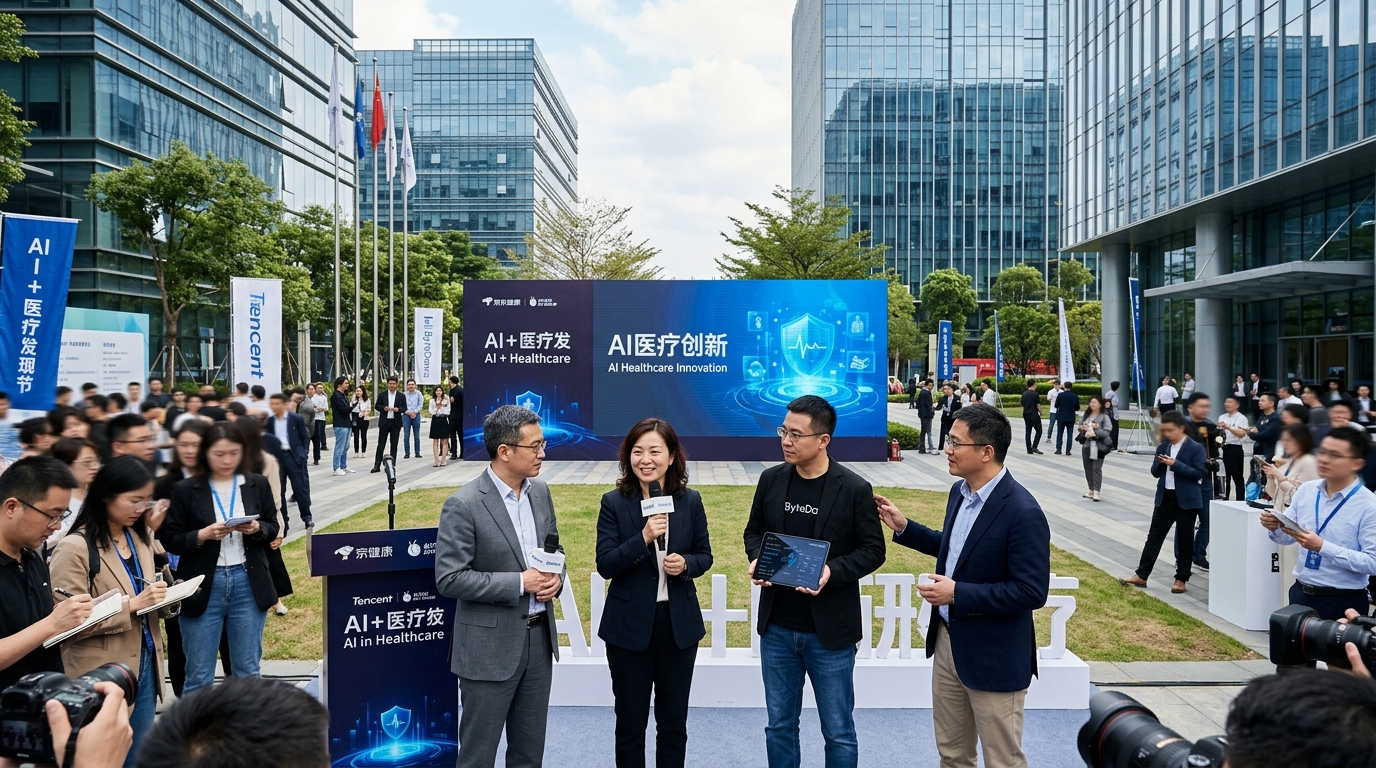
The global race for artificial intelligence (AI) supremacy has found a new, critical battlefield: the healthcare sector. In China, the internet's biggest players — ByteDance, Tencent, JD Health, and Ant Group — are no longer confined to search engines, e-commerce, or social media. Instead, they are diving deep into medical data and developing specialized Large Language Models (LLMs) that promise to revolutionize how patients interact with the healthcare system.
The Shift Towards Vertical Expertise
Following the initial explosion of general-purpose AI models like ChatGPT, the Chinese market is now pivoting toward "vertical" applications. Healthcare is the top priority as the country faces challenges such as an aging population and a significant imbalance in medical resources between major urban centers and rural areas. These companies view AI not just as a tool, but as the backbone of a new healthcare ecosystem.
ByteDance, the parent company of TikTok, has reorganized its healthcare efforts under the Xiaohe Health brand, integrating AI algorithms that assist in patient triaging and providing medical information via the Douyin platform. Their strategy leverages their massive user base, using video content as an entry point for digital medical consultations.
Tencent and JD Health: From Software to Diagnosis
Tencent, the giant behind WeChat, recently introduced its "Hunyuan" model tailored for medical use. Tencent's advantage lies in integration. With hundreds of millions of users already using WeChat to book hospital appointments, adding an AI that can analyze medical scans or suggest treatment plans is the next logical step.
"AI will not replace doctors, but doctors who use AI will replace those who do not," industry executives in Beijing often remark.
On the other hand, JD Health, the healthcare arm of e-commerce titan JD.com, is focusing on its "Jingyi Qianxun" model. This is an LLM trained on millions of medical records and scientific publications. JD Health uses this technology to automate telemedicine and optimize the pharmaceutical supply chain, ensuring the right treatment reaches the right patient at minimal cost.
Ant Group and Digital Infrastructure
Ant Group, the fintech company associated with Alibaba, is entering the space through "Ant Health." Their approach is more operational: creating AI assistants that guide patients through the chaotic system of Chinese hospitals, from paying bills to interpreting test results. Here, AI acts as a "digital navigator" that reduces stress and waiting times.
Challenges and Ethics
Despite the excitement, significant hurdles remain. Data privacy in China is a sensitive issue, especially regarding medical records. The Chinese government has introduced strict regulations for training AI models, requiring companies to guarantee accuracy and ethical data usage. Furthermore, AI "hallucinations" — the generation of incorrect information — can be fatal in healthcare, making human oversight by doctors absolutely essential.
In conclusion, the entry of ByteDance, Tencent, JD Health, and and Ant Group into AI healthcare marks a new era where technology becomes the link between patient and treatment. While the path is fraught with regulatory and technical pitfalls, the promise of more accessible and efficient healthcare is stronger than ever.





