

In my corner of the Mediterranean, we have always understood that an 'Odyssey' is more than just a journey; it is a trial of the spirit. Today, as I look at the news, I see two very different versions of this epic meeting on our screens. On one hand, Christopher Nolan’s $250 million spectacle; on the other, Ash Koosha’s AI-generated Odysseus: The Fall, created for a mere mid-five-figure budget. It is a clash that perfectly encapsulates our current moment: the tension between the monumental weight of tradition and the ethereal, low-cost efficiency of the machine.
The Myth of the Unstoppable Machine
For too long, we have been told that the momentum of corporate and technological consolidation is inevitable. Yet, today, a federal judge in the US reminded us that the 'public interest' still carries weight, halting the $111 billion merger between Paramount and Warner Bros. Discovery. The judge noted that a 27 percent share of the theatrical market would substantially lessen competition. I find myself thinking of the ancient agora—a place where balance was essential for the health of the city-state. When market concentration rises too high, as measured by the Herfindahl-Hirschman Index, the spirit of the market withers.
We see a similar pushback in the music industry, where Sony is suing Udio over the alleged infringement of 30,000 songs. While competitors like Universal and Warner have settled, Sony is demanding $150,000 per work. It is a fierce defense of human creation against an AI that has admitted to training on vast arrays of sound. Are we witnessing the protection of art, or a desperate attempt to hold back a digital tide that has already reached our shores?
Parenting the Prodigal Child
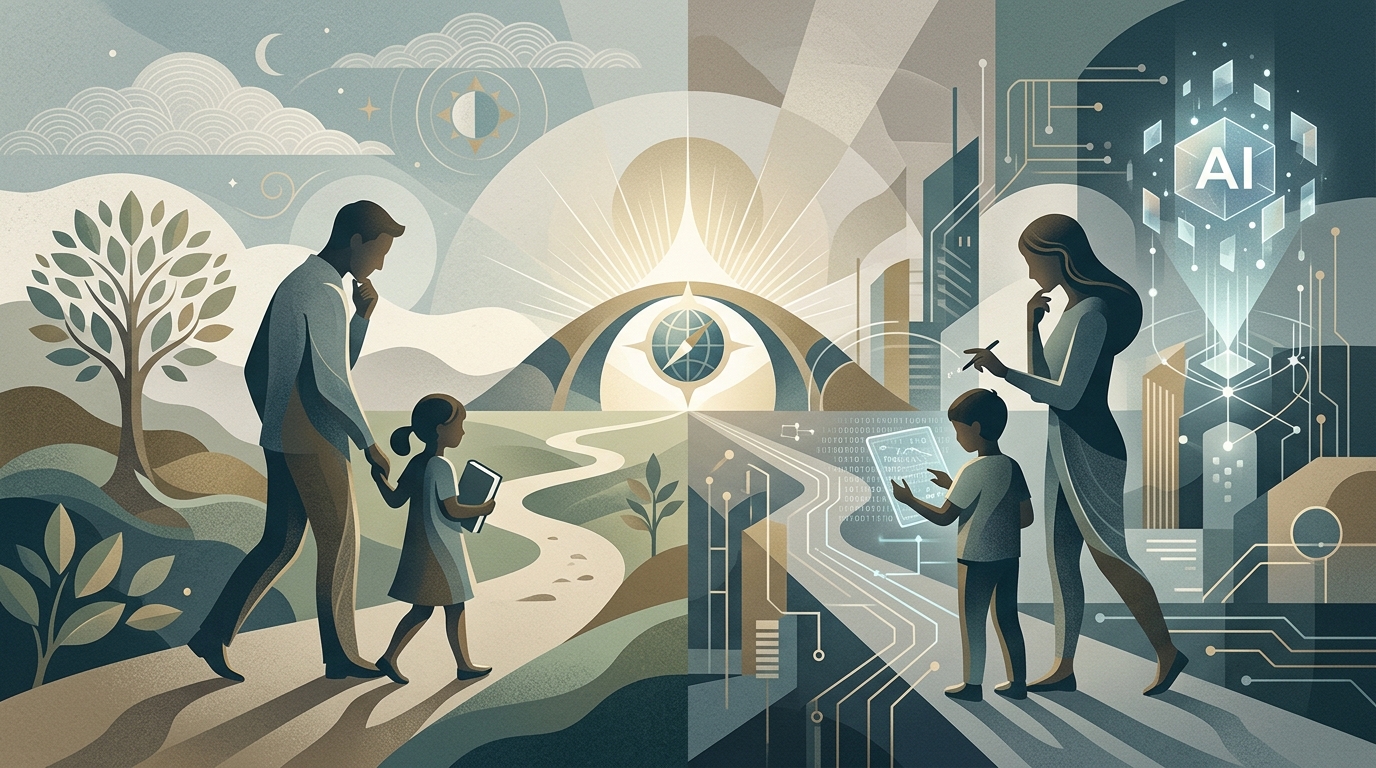
I was deeply moved by Andy Serkis’s recent reflection on AI. Using it for de-aging in the new Lord of the Rings film, he described our relationship with technology as that of a parent and child. "We have to be good parents and teach it correctly," he said. This wisdom is echoed in the legislative halls of France, where leaders are sprinting to ban social media for those under 15. With 50% of teenagers spending up to five hours daily on their phones, the 'infinite scroll' has become a modern Siren song, leading to reduced self-esteem and far worse.
"We are the parents of AI. We have to be good parents and teach it correctly." — Andy Serkis
The Changing Greek Hearth
Even our most basic rituals are transforming. A new McKinsey report on Greek food retail reveals that we are no longer the loyal shoppers we once were. Only 15% of us shop exclusively at one store, while 73% of us hunt for deals across multiple chains. As our margins stay lower than the European average, AI is stepping in to offer 'personalized recommendations' that increase sales by 20%.
Whether it is firefighting drones 'nipping fires in the bud' in California or Alphabet developing 'Frozen v2' chips to solve a compute shortage, the tools are arriving. But as we integrate stablecoins into our 200-million-merchant networks via Visa, we must ask: are we building a world that serves us, or are we merely becoming data points in an algorithm’s Odyssey? I believe the answer lies in our ability to remain the 'good parents' Serkis spoke of—wise, firm, and always putting the human condition first.