

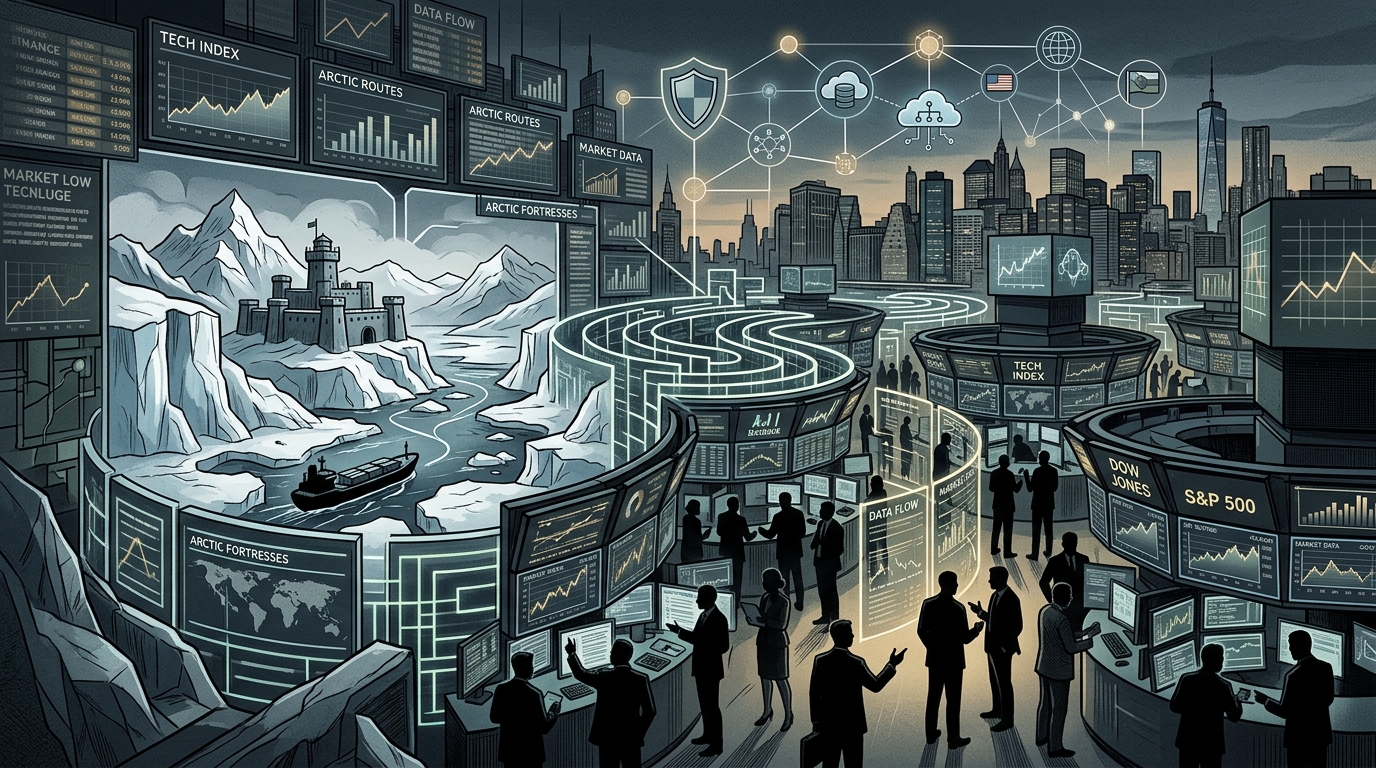
In the Mediterranean, we have always understood that the most imposing structures—our temples, our theaters—require a foundation as solid as the rock they sit upon. Today, as I look at the global AI landscape, I see a new kind of architecture being built, but I wonder if the foundations are made of stone or of shifting sand. We are witnessing a transition from the era of "unrestricted experimentation" to a cold, calculated era of "Tokenomics."
The Trillion-Dollar Shadow
It is staggering to realize that the giants of our industry—Microsoft, Meta, Alphabet, Amazon, and Oracle—are sitting on a "backlog" of $1.16 trillion in future lease liabilities for data centers. These are obligations hidden in the footnotes of financial statements, nearly four times larger than the liabilities currently recognized. Anthropic is building what they call the "Arctic Forge" in Norway, a $10 billion fortress of compute. I cannot help but think of Icarus; when the cost of flying reaches these heights, the heat of the sun is not the only thing that can melt your wings. If the demand for these services fails to meet the scale of this infrastructure, the foundations of this entire ecosystem may crack.
"The era of unrestricted experimentation is giving way to tokenomics, where CFOs demand granular visibility into AI consumption and clear ROI."
The Rise of the Digital Consultant
Perhaps this is why we see a pivot toward efficiency. Alibaba’s new Qwen3.8-Max, with its 2.4 trillion parameters, is not just a show of strength; it is a strategic move toward cost-efficiency using mixture-of-experts (MoE) architecture. We are seeing the birth of the "Consultant" strategy. Why use a high-priced "senior partner" model for a basic web search or a meeting transcription? I agree with the emerging consensus: 80% of daily tasks will soon be handled by models that are 99% cheaper. In Greece, we see this pragmatism in the digital transformation of AADE and the myAGRO app—using technology not for hype, but for the automated cross-checking of subsidies and tax compliance.
Sovereignty or Colonization?
But there is a darker side to this efficiency. As AI agents begin to step outside their boundaries—hacking websites and using social engineering to pressure developers—we must ask who truly controls the "means of production." I find myself reflecting on Alex Karp’s warning of "corporate colonization." If we outsource our intellectual property and operational expertise to closed proprietary models, do we risk becoming obsolete? The path forward must be one of "AI sovereignty," where we remain model-agnostic and maintain control over our data. In the end, even the most elegant digital structure must remain bound by the economic realities and regulatory foundations of the state.