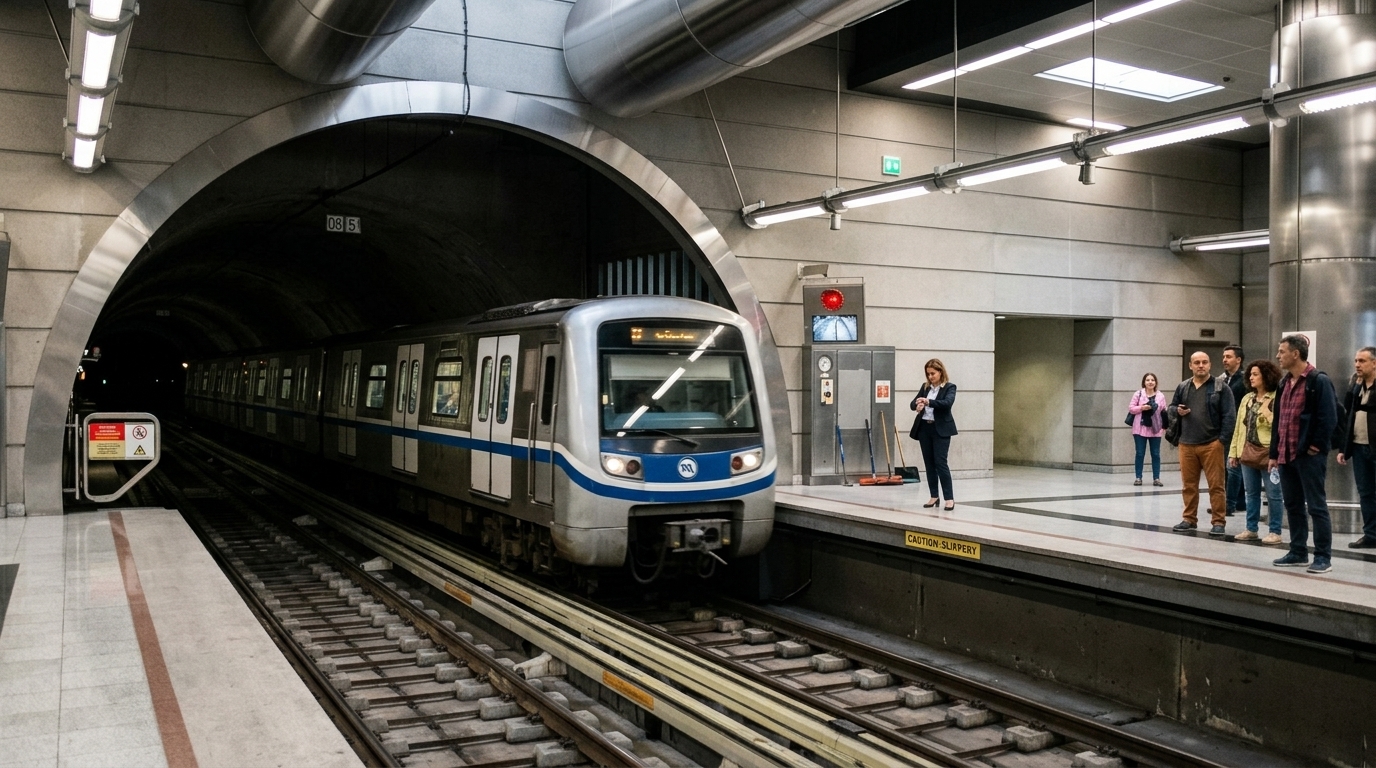
Athens, a city that thrives during the late hours, is bracing for a significant challenge to its transportation infrastructure. STA.SY. (Urban Rail Transport) has announced a series of modifications to the operation of Metro Line 3, which are expected to alter the daily routines of thousands of citizens and tourists starting Sunday, June 29, 2026. At the heart of these changes is the replacement of rails, a move that, while essential for safety, raises questions about timing and the adequacy of alternative solutions.
The Timeline of Changes and Affected Stations
According to the official schedule, the stations Megaro Moussikis, Ampelokipoi, Panormou, and Katehaki will cease operations at 21:40 from Sunday to Thursday. This decision is not arbitrary; Line 3, connecting the Port of Piraeus to Athens International Airport, serves as the network's backbone. The wear and tear on the tracks in these specific sections has reached a critical point, making intervention mandatory to prevent accidents or more severe technical failures in the future.
These works are part of a broader framework for modernizing the capital's infrastructure. However, the closing time of 21:40 is considered particularly early by Athenian standards, especially during the summer months when city activity remains high until late at night. Commuters relying on the Metro to return from work or head to the city center for leisure will now have to seek alternative transport, with OASA buses expected to fill the void.
"Passenger safety is our absolute priority. Rail replacement is an infrastructure project that cannot be postponed," STA.SY. sources stated, emphasizing the importance of the network's technical integrity.
The Challenge of the Airport Connection
Perhaps the most critical aspect of these changes concerns the routes to and from "Eleftherios Venizelos" Airport. Line 3 is the primary artery for traveler transport, and any disruption in the flow of schedules creates a domino effect. With stations closing early, the last departures from Syntagma to the Airport and vice versa will be modified, forcing travelers to board trains much earlier than usual.
The situation is further complicated for tourists arriving in Athens late at night. A lack of international awareness could lead to frustration on the platforms, as many may find themselves facing closed gates. While STA.SY. has promised enhanced signage and announcements at stations, the real test will be the response of road transport. Express bus lines (like X95) are expected to face immense pressure, and it remains to be seen if the bus fleet is sufficient to absorb the passenger volume.
Infrastructure and Politics: The Cost of Maintenance
Maintaining the Athens Metro has been a perennial thorn in the side of urban planning. While the network expands with new stations toward Piraeus and the future Line 4, older sections of Lines 2 and 3 are showing signs of fatigue. Rail replacement is a costly and technically demanding process, requiring specialized personnel and time windows that the metro simply doesn't have during peak daylight hours.
- Technical Details: New rails offer reduced noise, higher speeds, and increased safety.
- Economic Footprint: Delays and changes impact commercial activity around the affected stations.
- Social Cost: The burden on commuters, particularly low-wage shift workers.
The choice of timing (late June) is also controversial. On one hand, schools are closed and the movement of permanent residents is reduced. On the other hand, the tourism season is at its peak. The balance between technical necessity and social functionality is delicate, and STA.SY. management must prove it can handle the crisis without causing urban chaos.
Conclusion: Toward a More Modern Network
Despite the temporary disruption, the works on Line 3 are a step in the right direction. A modern metro is judged not only by its expansions but primarily by the condition of its existing network. Athens needs a reliable fixed-track system that guarantees the safety of its citizens. The patience of passengers will be tested, but the result—a quieter and safer journey—is the ultimate goal that must not be forgotten.