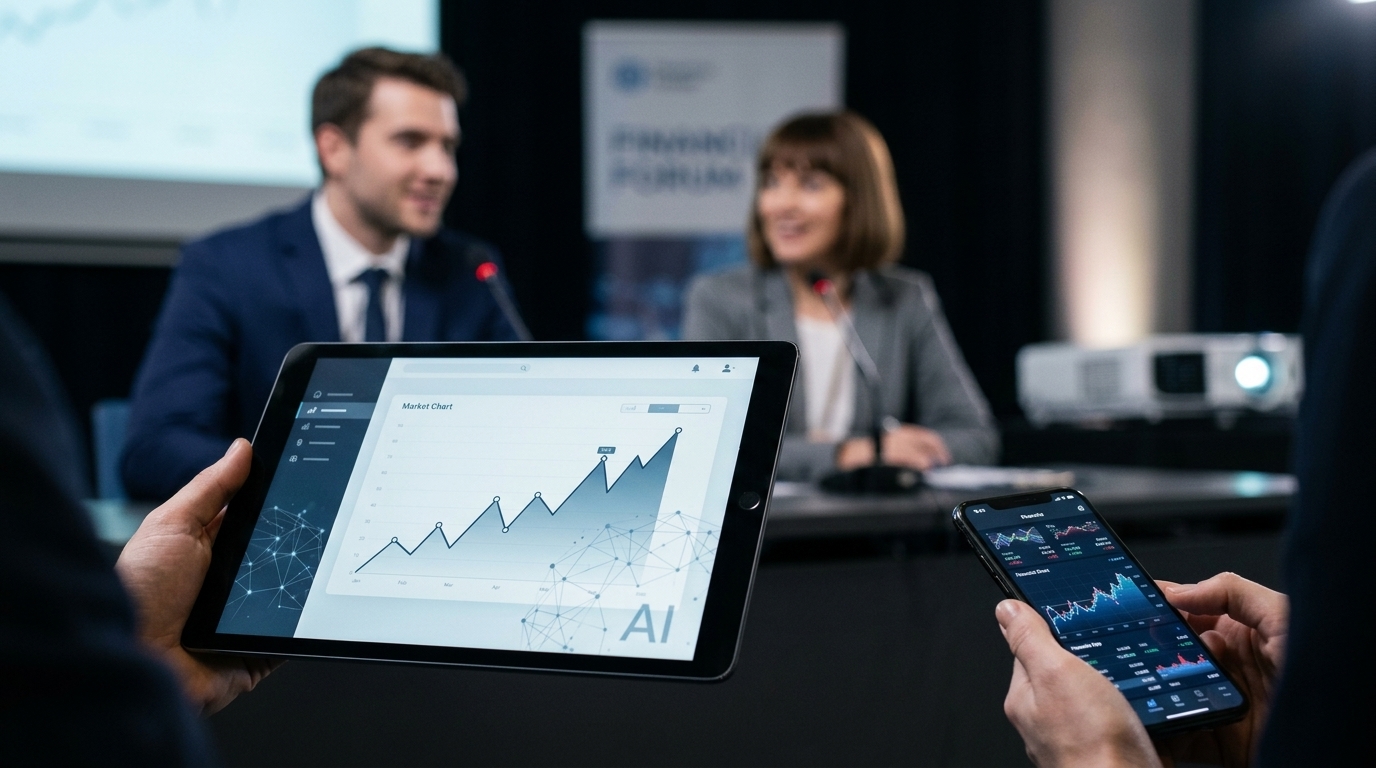
On the precipice of a new industrial revolution, the Goldman Sachs Research report serves as both a compass and a warning. The investment giant's chief economist, Jan Hatzius, presents a vision that balances technological determinism with economic optimism. The core premise is clear: Generative AI is not merely an automation tool but a catalyst that will reshape the global economic structure, affecting millions of professionals.
The 9% Shock and Global Scale
According to the analysis, approximately 9% of the US workforce is at risk of direct displacement by artificial intelligence. On a global scale, this translates to the automation of tasks equivalent to 300 million full-time jobs. The distinguishing factor of this transition compared to previous ones is its target: this time, white-collar workers are on the frontline. Legal consultants, administrative staff, and data analysts are seeing their skills digitized at a pace that exceeds any historical precedent.
"AI could lead to a productivity boom, increasing global GDP by 7% over a decade, but the cost of transition will be unevenly distributed," the report notes.
Goldman Sachs points out that 25% to 50% of the workload in many occupations can be automated. However, this does not necessarily mean the elimination of the position, but a fundamental change in its nature. The worker of the future will have to learn to collaborate with the algorithm, transforming themselves from an executor into a supervisor.
The Theory of Creative Destruction
Despite the grim predictions of job displacement, economic history offers a different perspective. Goldman Sachs reminds us that technological progress always operates through the mechanism of "creative destruction." Approximately 60% of today's jobs did not exist in 1940. Occupations such as web designers, cybersecurity analysts, or data engineers are products of previous technological waves.
Hatzius's optimism stems from the belief that the resources freed up by automation will be channeled into new sectors that we cannot even imagine today. Increased productivity lowers the cost of services, boosts disposable income, and ultimately creates demand for new forms of employment. The critical question remains: how quickly can the education system and the labor market adapt to these changes?
Social Implications and Strategic Adaptation
For modern economies, the challenges are twofold. On one hand, digital transformation can bridge productivity gaps and ignite growth in stagnant sectors. On the other hand, the risk of widening inequality is palpable. High-skilled workers will likely see their earnings increase, while those performing repetitive cognitive tasks may find themselves in a precarious position.
- Immediate need for workforce reskilling and upskilling.
- Emphasis on "human-centric" skills that AI struggles to replicate: empathy, critical thinking, and strategic decision-making.
- Government intervention to ensure social cohesion during the transition period.
In conclusion, the Goldman Sachs report is not a manifesto of fear, but a call to preparation. Artificial intelligence will remove the drudgery from many tasks, but the responsibility for distributing the wealth generated remains a deeply political and human decision. As of July 2026, humanity stands at a crossroads where technology offers the promise of abundance, provided we can manage the social turbulence that accompanies it.