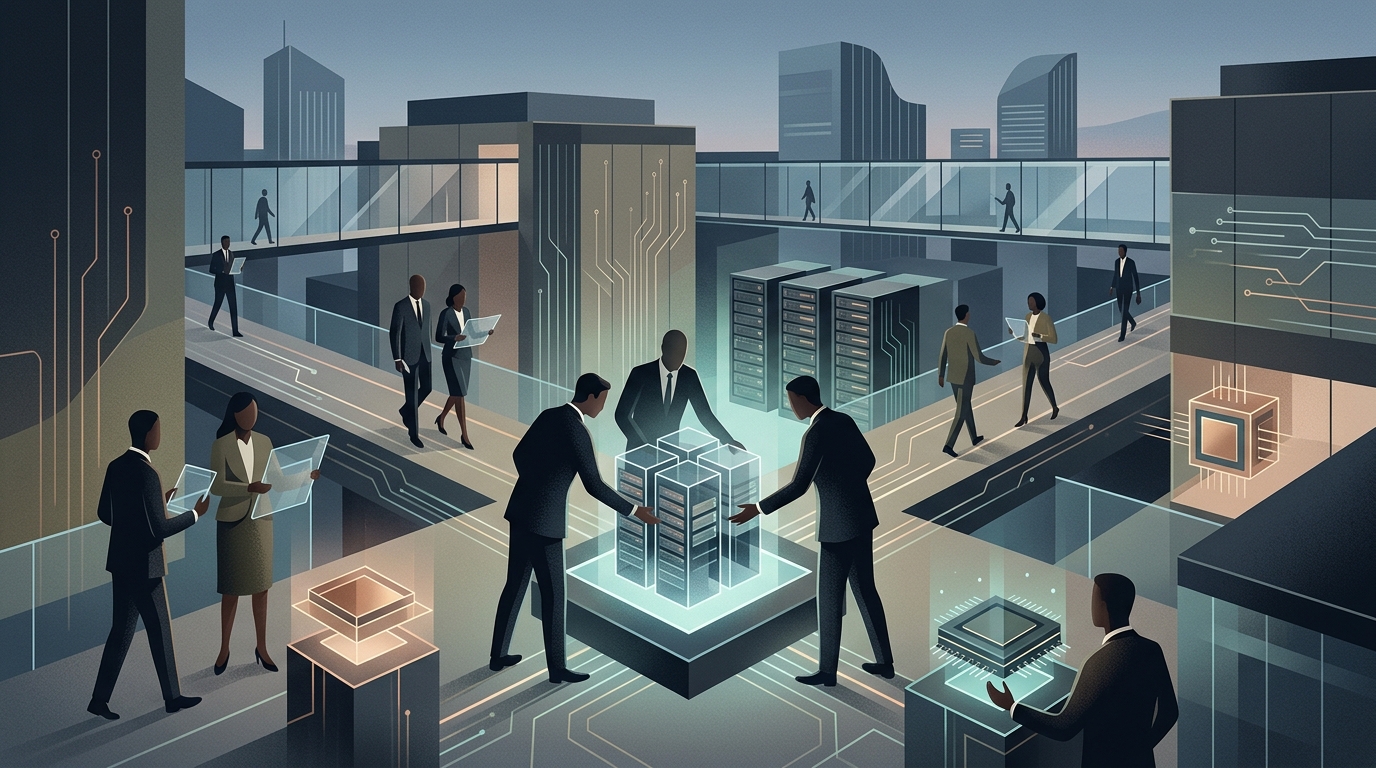
In the high-stakes arena of global artificial intelligence, Meta Platforms is preparing for a leap that could redefine its operational DNA. According to an internal memo obtained by Reuters, the social media giant is set to put its custom-designed AI chip—internally recognized as part of the MTIA (Meta Training and Inference Accelerator) program—into mass production this coming September. This move is far more than a mere hardware refresh; it represents a fundamental pivot in the company's long-term strategy as it seeks to double its computing capacity while aggressively decoupling from external suppliers, most notably the industry titan, Nvidia.
The Strategy of Silicon Sovereignty
For years, Meta has relied on general-purpose Graphics Processing Units (GPUs) to train its sprawling neural networks and serve content to billions of users across Facebook, Instagram, and WhatsApp. However, the dawn of Generative AI and the rapid evolution of the Llama large language models have fundamentally shifted the requirements. The new chip, representing the second generation of the MTIA architecture, is laser-focused on 'inference'—the process by which a pre-trained model processes live data to answer user queries or recommend content.
This drive toward vertical integration mirrors the paths taken by peers like Google with its Tensor Processing Units (TPUs) and Amazon with its Trainium and Inferentia silicon. Meta recognizes that to maintain a competitive edge, it must exert control over its entire hardware stack. By utilizing custom silicon, the company can optimize energy efficiency and processing throughput in ways that off-the-shelf Nvidia cards, designed for broader applications, simply cannot match for Meta's specific workloads.
Economic Implications and the 'Nvidia Tax'
The financial ramifications of this development are profound. Meta is projected to funnel tens of billions of dollars into infrastructure this year alone. Reducing its reliance on Nvidia, even partially, could save the company billions over a multi-year horizon. The insatiable demand for Nvidia’s H100 chips has driven prices to astronomical levels, creating what industry analysts call the 'Nvidia Tax' for tech firms. By developing its own chips, Meta gains significant leverage and ensures its growth trajectory isn't throttled by supply chain bottlenecks or the pricing whims of a single vendor.
- Significant reduction in long-term data center operational costs.
- Enhanced optimization for ranking algorithms and ad delivery systems.
- Greater autonomy against geopolitical shifts in the semiconductor market.
However, the challenge of scale remains formidable. While the new chip will bolster inference tasks, the training of massive models like Llama 3 and the upcoming Llama 4 will likely continue to depend on Nvidia’s raw horsepower for the foreseeable future. Meta appears to be adopting a hybrid approach: internal silicon for day-to-day operations and high-end third-party hardware for the heavy lifting of frontier research.
The Future: From Software to Infrastructure Giant
This transition marks the end of an era where social media companies were viewed strictly as software entities. Today, Meta is evolving into a large-scale infrastructure power. The success of the chip entering production in September will be the litmus test for whether CEO Mark Zuckerberg can realize his vision of AI-integrated life—from Ray-Ban smart glasses to the immersive Metaverse. The battle for AI supremacy is no longer fought solely in lines of code; it is being waged in the cleanrooms of Taiwan, where Meta has secured TSMC’s manufacturing prowess to bring its designs to life.
"We aren't just building chips; we are building the foundation for the next decade of human connection," a Meta executive noted in the internal communication.
In conclusion, September will serve as a pivotal milestone. If Meta succeeds in doubling its computing capacity through its own engineering, it will send a clear message across Silicon Valley: the era of chip-maker hegemony may be waning as the world’s largest consumers become their own most formidable suppliers.